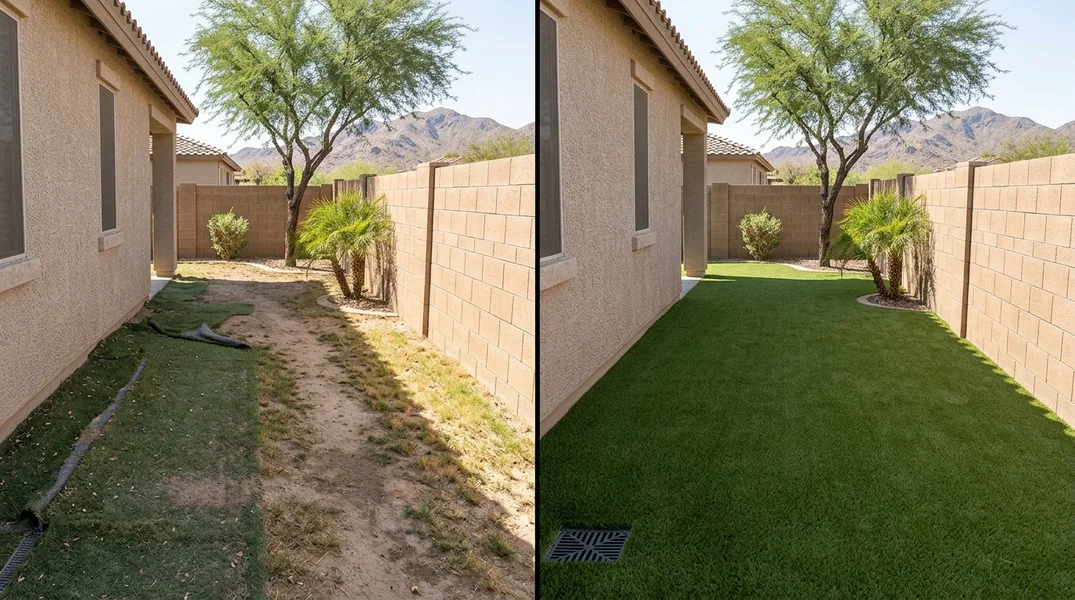
The Peoria Landscape Challenge: Why One Size Doesn't Fit All
Living in Peoria means dealing with one of Arizona's most demanding climates. Summer temperatures regularly exceed 110 degrees, and the West Valley's low annual rainfall creates a perfect storm for homeowners trying to maintain traditional lawns. Water restrictions grow tighter every year, and your monthly utility bill reflects every gallon your yard consumes. This reality has forced many Peoria residents to reconsider what a healthy yard actually looks like.
The good news is that you have genuine options. Whether you're looking at artificial turf, native Bermuda grass, or a complete xeriscaping redesign, each approach has real merits and real drawbacks. The key is understanding how these solutions perform in our specific climate, how much time and money they demand, and which aligns with your lifestyle and values. This guide breaks down each option honestly so you can make a decision that actually works for your home.
Artificial Turf vs Real Grass: The Head-to-Head Comparison
Residential Artificial Grass Installation has evolved dramatically over the past decade. Modern synthetic turf looks and feels remarkably close to natural grass, and it eliminates the watering cycle entirely. For Peoria homeowners, this means zero water bills related to lawn maintenance, no mowing, no fertilizer applications, and no dead brown patches during peak summer heat. Many families see their water usage drop by 50 to 70 percent after switching to artificial turf, which translates into real savings and genuine environmental benefit in a drought-prone region.
Real grass, whether Bermuda or fescue, requires consistent watering, regular mowing, seasonal fertilization, and pest management. In Peoria's intense heat, keeping natural grass healthy demands deep watering at least twice weekly during summer months. The labor and water costs add up quickly. However, real grass does provide a traditional aesthetic that some homeowners prefer, and it naturally cools the surrounding area through transpiration. If you have young children or pets, the feel of natural grass underfoot may matter to your family's outdoor experience.
The upfront pricing for artificial turf installation is higher than seeding natural grass, but the long-term math favors synthetic options in our climate. Over a 10-year period, most homeowners recoup their investment through water savings, eliminated maintenance costs, and the durability of quality turf products. If you're considering artificial turf for specific areas like Pet Turf & Dog Run Installation or a Pool Surround Turf space, the return on investment becomes even clearer.
Bermuda Grass in Peoria: The Native Compromise
Bermuda grass is the traditional choice for Arizona yards, and for good reason. This warm-season grass thrives in our heat and naturally goes dormant during winter months, reducing water needs compared to cool-season varieties. Bermuda is durable, tolerates foot traffic well, and recovers quickly from damage. If you want a genuine grass lawn without the extreme water demands of fescue or bluegrass, Bermuda represents a reasonable middle ground.
However, 'reasonable' in Peoria's climate still means significant water consumption. Established Bermuda lawns need deep watering one to three times per week during the growing season, depending on soil type and sun exposure. You'll spend time mowing weekly during peak growth periods, applying pre-emergent herbicides, and managing common pests like grubs and Bermuda grass mites. The grass also goes completely brown in winter, which some homeowners find unattractive. Additionally, Bermuda spreads aggressively and requires edging along beds and borders to keep it contained.
For homeowners who genuinely value the feel and appearance of living grass, Bermuda remains a viable choice. But it requires commitment to a regular maintenance schedule and acceptance of higher water costs. In neighborhoods where HOAs mandate living grass, or where children spend significant time playing in the yard, Bermuda can be the right answer. Just understand that you're choosing tradition and natural aesthetics over efficiency and convenience.
Xeriscaping and Drought-Tolerant Landscaping: Reimagining Your Outdoor Space
Xeriscaping represents the most dramatic departure from traditional lawns, and for many Peoria homeowners, it's the most sustainable long-term solution. This landscaping philosophy replaces turf with drought-tolerant plants, decorative rock, mulch, hardscaping, and strategic water features. A well-designed xeriscape yard uses 50 to 75 percent less water than a traditional lawn while creating visual interest and supporting local wildlife.
The appeal of xeriscaping goes beyond water savings. Native and adapted plants like Baja fairy duster, desert rose, Apache plume, and various salvias require minimal supplemental watering once established. You eliminate mowing entirely, reduce pest problems, and create a landscape that actually improves over time as plants mature. Many xeriscape designs are strikingly beautiful, with layered textures, seasonal color variations, and architectural interest that a monoculture lawn simply cannot match.
The primary challenge with xeriscaping is the upfront design and installation investment. Unlike artificial turf or Bermuda grass, a quality xeriscape requires thoughtful plant selection, proper soil amendment, and professional installation to ensure long-term success. The design phase takes time because you're essentially reimagining your entire outdoor space rather than replacing one surface with another. Additionally, some homeowners worry about the 'desert' aesthetic, though modern xeriscape design has evolved far beyond the stark rock-and-cactus approach of decades past.
For families committed to environmental stewardship and willing to invest in landscape transformation, xeriscaping offers unmatched long-term benefits. It's particularly effective for larger properties or homes where reducing overall water consumption matters deeply to the owner's values.
Residential Artificial Grass Installation Cost in Peoria: What to Budget
Understanding the financial reality of each option helps clarify which choice makes sense for your situation. Artificial turf installation typically ranges from $8 to $15 per square foot installed, depending on turf quality, site preparation requirements, and local labor costs. For a typical residential yard of 1,500 square feet, you're looking at $12,000 to $22,500 for professional installation. Bermuda grass installation costs significantly less upfront, usually $1 to $3 per square foot for sod installation, or even less if you seed and wait for establishment. Xeriscaping costs vary widely but often fall in the $10 to $20 per square foot range depending on plant selection and hardscaping complexity.
The long-term financial picture shifts dramatically when you factor in maintenance and water costs. A typical Peoria household with natural grass spends $1,200 to $2,400 annually on water, fertilizer, pest control, and equipment maintenance. Artificial turf requires occasional rinsing and debris removal, costing perhaps $200 to $400 yearly. Xeriscaping, once established, may cost only $300 to $600 annually for minimal supplemental watering and occasional plant maintenance. Over 10 years, these differences compound into substantial savings with artificial turf and xeriscaping options.
For a detailed assessment of pricing specific to your property, Peoria Turf Installation offers comprehensive consultations. Call (623) 237-9707 or request a free estimate to understand exactly what your chosen solution will cost both initially and over time. Having professional guidance prevents costly mistakes and ensures you're comparing genuine apples-to-apples costs.
Which Option Is Right for Your Peoria Home?
The honest answer is that each option wins for different homeowners and different situations. Choose artificial turf if you want maximum convenience, lowest water consumption, and long-term cost savings without ongoing maintenance demands. This solution excels for families with pets, busy professionals, or anyone who views yard work as an unwelcome obligation. It's also ideal if you're considering specialized applications like Putting Green Installation or want to create a perfect play surface for children.
Choose Bermuda grass if you genuinely enjoy lawn maintenance, prefer the authentic feel of natural grass, and accept higher water costs as a trade-off for tradition. This option works well for families with strong preferences for natural landscaping or in neighborhoods where living grass is expected or required. You'll spend more time and money, but you'll have a genuine grass lawn that responds to care and improves with attention.
Choose xeriscaping if you're passionate about environmental sustainability, want to fundamentally transform your outdoor space, and are willing to invest in thoughtful landscape design. This approach creates the most distinctive and beautiful yards when done well, and it delivers unmatched water efficiency. It's perfect for homeowners who see their yard as a design canvas rather than simply a functional outdoor surface.
Many Peoria homeowners actually choose a hybrid approach, combining artificial turf in high-traffic areas with xeriscape plantings in beds and borders. This strategy lets you enjoy the convenience of synthetic turf where it matters most while creating visual interest and environmental benefits through strategic landscaping.
If you're ready to explore artificial turf for your Peoria property, Peoria Turf Installation is here to guide you through the process. Contact us at (623) 237-9707 or visit our website to request a free estimate and discuss your specific yard needs with our experienced team.
Looking for a professional artificial grass installation company in Peoria? Peoria Turf Installation responds fast for all your artificial grass installation needs.
Get a Free Quote