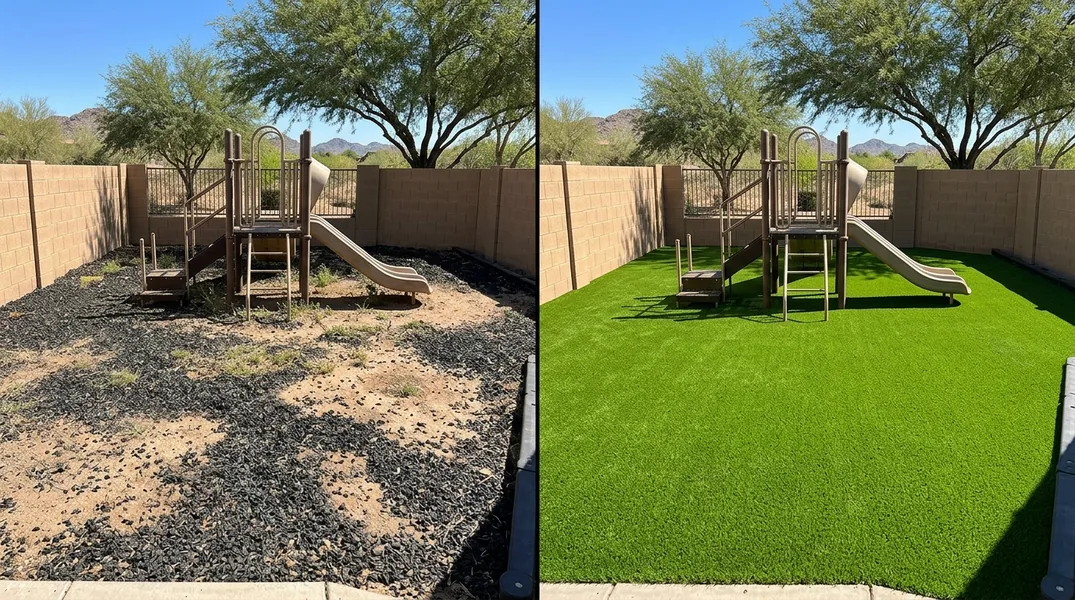
Why Caliche Is a Challenge for Artificial Grass Installation
If you own a home in Peoria, you've likely encountered caliche. This rock-hard layer of calcium carbonate sits just below the soil surface across much of Arizona and creates one of the biggest obstacles for Residential Artificial Grass Installation. Caliche forms over thousands of years as minerals accumulate in the desert soil, creating a nearly impenetrable barrier that can be several inches thick.
The real problem isn't the caliche itself, but what happens when water meets it. During Peoria's monsoon season (typically June through September), heavy rains pour down on your yard. Without proper drainage planning, water has nowhere to go when it hits that caliche layer. It pools, it puddles, and it creates a swampy mess beneath your artificial turf. This standing water damages the turf backing, promotes mold growth, and can lead to costly repairs or complete reinstallation within just a few years.
Understanding Artificial Grass Drainage and Water Flow
Artificial grass drainage is fundamentally different from natural grass drainage. With real sod, water soaks into the soil and moves through it naturally. With artificial turf, water must flow across the top surface and then down through the base layers to percolate away. If your base isn't designed correctly, that water gets trapped, and your investment suffers.
The key principle is this: water should move freely downward and laterally away from your turf area. This means creating a sloped base (typically 1 to 2 percent grade), removing or breaking through caliche, and installing layers of material that allow water to pass through quickly. Many homeowners don't realize that proper Peoria yard preparation requires thinking about water management from day one, not after problems appear. The base prep you do now determines whether your artificial grass will look great and last 10+ years or fail within a few seasons.
Breaking Through Caliche: The First Step in Turf Base Prep
Before you can install any turf base prep materials, you need to address the caliche layer. This isn't a job for a shovel and elbow grease. Caliche is cement-hard, and trying to dig through it manually will exhaust you and likely damage your tools. Most professional installations in Peoria require heavy equipment like a jackhammer, pneumatic breaker, or even a small excavator to fracture and remove the caliche.
The goal isn't necessarily to remove every bit of caliche, but to break it up so water can percolate through. A good contractor will fracture the caliche into smaller chunks and sometimes remove the top 2 to 4 inches entirely, depending on thickness and yard conditions. Once broken up, the caliche can actually serve as part of your base layer, with proper drainage materials layered on top. This process takes time and expertise, which is why attempting Residential Artificial Grass Installation without professional help often leads to drainage failures. If you're ready to move forward, contact Peoria Turf Installation at (623) 237-9707 to discuss your caliche situation and get a free estimate.
What to Put Under Artificial Grass: Base Layers That Work
What to put under artificial grass is a question we hear often, and the answer depends on your existing soil and drainage conditions. In general, a proper base system includes multiple layers, each serving a specific purpose. Starting from the bottom after caliche removal, you'll typically install 4 to 6 inches of crushed stone or recycled asphalt. This layer allows water to move through quickly and provides structural support for the turf.
Above the crushed stone, many installers add a layer of sand or a specialized base material designed for artificial turf. This intermediate layer helps with water distribution and creates a stable, level surface. Finally, comes the artificial grass underlay, also called a shock pad or drainage mat. This is a critical component that sits directly under your turf. It absorbs impact, provides cushioning, and most importantly, it allows water to drain through while preventing soil from mixing with the grass backing. Quality underlays are engineered to move water laterally and downward, preventing pooling even during heavy monsoon storms. The entire base system, when installed correctly, acts as a drainage network that keeps water moving away from your turf and prevents the soggy, moldy conditions that destroy artificial grass.
Monsoon-Ready Design: Sloping and Perimeter Drainage
Arizona's monsoon season brings intense, concentrated rainfall. A typical monsoon storm might drop an inch or more of rain in just 30 to 45 minutes. Your artificial grass yard needs to handle that volume without flooding. This is why slope matters. A proper installation includes a gentle slope, usually about 1 to 2 percent grade, that directs water away from structures and toward drainage areas. This isn't steep enough to be noticeable to the eye, but it's essential for water management.
Beyond slope, many professional installations include perimeter drainage solutions. This might involve installing a French drain system around the yard's edges, creating a swale or low spot where water naturally collects and drains, or directing water toward existing drainage infrastructure. Some homeowners with Pool Surround Turf or Pet Turf & Dog Run Installation projects add pop-up drains or dry wells to handle concentrated water. The point is that monsoon-ready design requires planning and coordination with your installer. Peoria Turf Installation understands the unique drainage challenges of desert yards and designs every installation with monsoon season in mind.
Artificial Grass Underlay Selection: Your Last Line of Defense
The artificial grass underlay you choose makes a real difference in how your turf performs. Not all underlays are created equal. Some are thin, budget-friendly options that offer minimal drainage and cushioning. Others are premium systems with advanced perforations, shock-absorbing foam, and superior water flow characteristics. In Peoria, where monsoon moisture and intense sun are both concerns, investing in a quality underlay is money well spent.
Look for underlays specifically rated for drainage in high-rainfall environments. These products are engineered with large drainage holes or channels that allow water to flow through rapidly without pooling. Some premium underlays also include antimicrobial treatments to prevent mold and mildew growth, which is important in a desert climate where humidity spikes during monsoon season. The underlay also provides cushioning and comfort underfoot, which is especially valuable if you have kids or pets using the yard. When you're evaluating pricing for your installation, don't skimp on the underlay. It's one of the most cost-effective ways to ensure your turf lasts for years and performs well through every monsoon season.
Getting Professional Help: When to Call an Expert
DIY artificial grass installation might seem like a way to save money, but caliche removal and proper base prep require specialized knowledge and equipment. One mistake, like failing to break through caliche or installing an underlay that doesn't drain properly, can cost thousands in repairs or replacement. Professional installers have the experience to assess your specific yard conditions, design a drainage system that works for your property, and execute the installation correctly the first time.
Peoria Turf Installation brings years of experience installing artificial grass on caliche-heavy desert properties throughout the region. We know how to handle the unique drainage challenges of Peoria yards and we build every installation to withstand monsoon season. Whether you're considering Residential Artificial Grass Installation for your backyard, a Putting Green Installation, or any other turf project, we're here to help. Call us at (623) 237-9707 or request a free estimate today. We'll evaluate your caliche situation, discuss your drainage concerns, and design a solution that keeps your yard beautiful and functional for years to come.
Looking for a professional artificial grass installation company in Peoria? Peoria Turf Installation responds fast for all your artificial grass installation needs.
Get a Free Quote